Panic Attacks: Why They Happen and What Helps
If you are looking for panic attack support in Moncton, you probably already know how convincing a panic attack feels. Your heart pounds, your chest tightens, your hands tingle, and some part of you is sure that something is seriously wrong. Then it passes, and what is left is the worry about when the next one will come.
This article explains what is happening in the body during a panic attack, why the cycle tends to repeat, what helps in the moment, and where naturopathic care with clinical hypnotherapy and HeartMath HRV biofeedback fits.
Important: Chest pain, trouble breathing, fainting, or symptoms that are new, severe or different from your usual pattern need medical assessment. Call 911 or go to the emergency department. If you are in crisis or thinking about harming yourself, call or text 9-8-8.
Have a question first? Book a free 5-minute phone call.
What a panic attack is
A panic attack is a sudden surge of the body’s alarm response. It usually builds within minutes and can include:
- A racing or pounding heart
- Shortness of breath or a tight chest
- Dizziness, shaking, sweating or tingling
- Nausea or a churning stomach
- Feeling detached or unreal
- Fear of fainting, losing control or dying
These sensations are the same ones the body produces when it needs to run or fight. In a panic attack the alarm goes off without a matching danger. The symptoms are real and physical, and they are uncomfortable, but the surge itself rises, peaks and settles.
Why panic attacks repeat
For many people the first attack is not the main problem. The problem is what follows:
- Body scanning. You start watching your heartbeat and breathing for early signs.
- Misreading sensations. A skipped beat or a warm room gets read as the start of another attack.
- More alarm. That thought triggers adrenaline, which produces more of the sensations you were watching for.
- Avoidance. You begin to avoid the grocery store, the highway, meetings or exercise, and life gets smaller.
This loop is sometimes called fear of fear. It explains why panic can continue long after the original stress has passed, and it is also where change is most possible.
What helps in the moment
- Name it. Telling yourself “this is a panic surge and it will pass” reduces the second wave of alarm.
- Slow the exhale. Breathe in gently through the nose and out slowly, making the out-breath longer than the in-breath. Avoid big gulping breaths, which can add to dizziness and tingling.
- Stay where you are if it is safe. Leaving in a hurry teaches the body that the place was dangerous.
- Anchor attention outward. Feel your feet on the floor and describe a few things you can see and hear.
- Let it peak. Fighting the sensations tends to prolong them. Allowing them to rise and fall usually shortens the episode.
Start with an assessment
Thyroid changes, heart rhythm issues, low blood sugar, some medications, caffeine and alcohol can all produce panic-like symptoms. If panic attacks are new for you, see your family doctor or nurse practitioner first so these can be checked.
Once medical causes have been checked, the care described below can be your main support or work alongside care you already receive from your doctor or counsellor.
How care at Naturology Centre fits
Naturopathic review
Your first visit is an Initial Naturopathic Consultation with Andrew Maillet, ND, DO. It covers when the attacks happen, what you have already tried, and the everyday factors that can keep the nervous system primed: sleep, caffeine and alcohol, eating patterns, digestive symptoms, pain and recovery time.
HeartMath HRV biofeedback
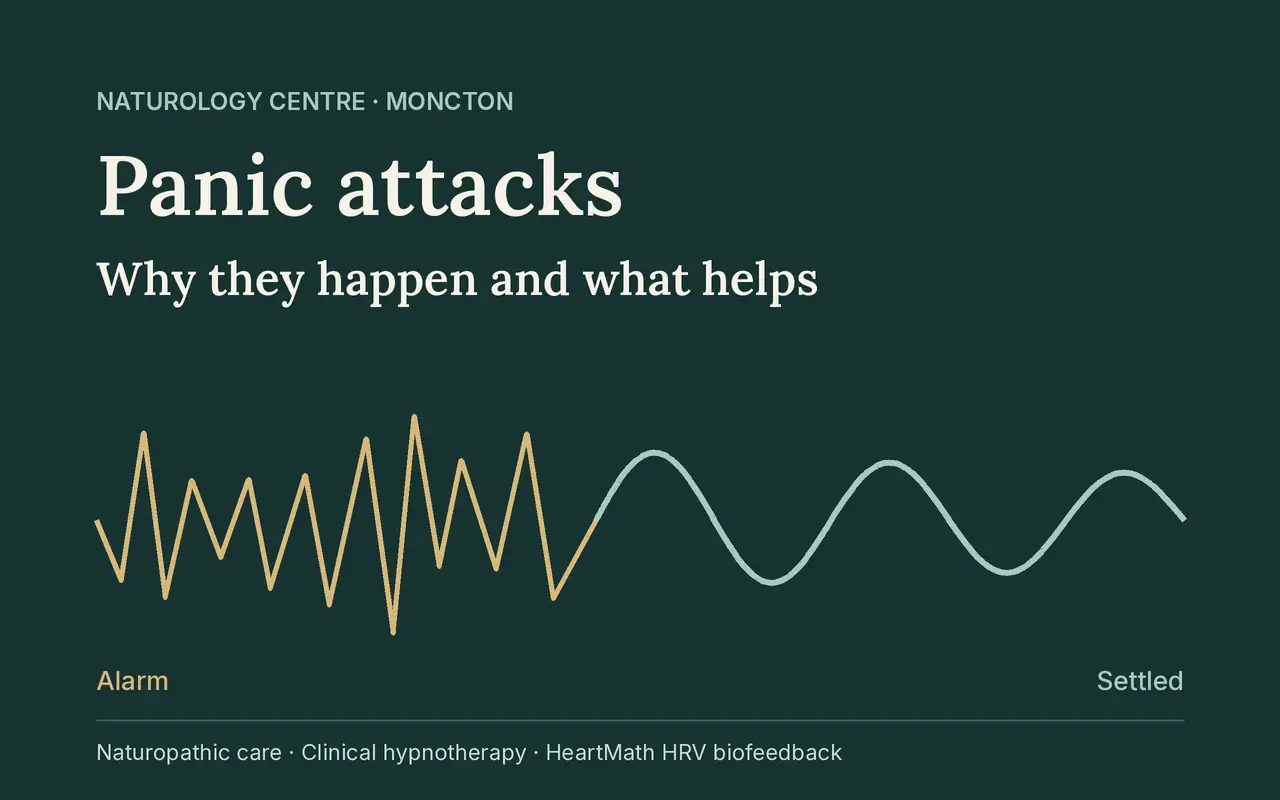
Heart rate variability (HRV) is the natural beat-to-beat variation in your heart rhythm. It reflects how well the calming and activating branches of the nervous system are working together. Under stress the rhythm tends to look jagged and irregular. During slow, steady breathing and a settled emotional state it becomes smooth and wave-like, a pattern HeartMath calls coherence.
In a session, a small sensor on your finger or earlobe shows your heart rhythm on a screen in real time while you practise HeartMath techniques: slow, even breathing through the heart area, combined with a deliberate shift of attention. You can watch the pattern change as your body settles.
For people with panic this is often the turning point, for three reasons:
- It is visible. You see proof that your body’s state can be shifted on purpose, which weakens the belief that panic is out of your control.
- It is trainable. A few minutes of daily practice builds the skill, so it is available when you notice early signs.
- It is measurable. Your coherence scores give you and Andrew a way to track progress from visit to visit.
Clinical hypnotherapy
Hypnotherapy uses focused attention and guided imagery to rehearse a calmer response to the sensations and situations you have come to fear. The work targets anticipatory fear, body scanning and avoidance. You remain aware and in control throughout, and you can pause or stop at any time.
Nutrition guidance for a steadier brain and nervous system
What and when you eat affects how reactive the alarm system is. Naturopathic guidance is individualized, but these are the areas most often reviewed:
- Blood sugar. Long gaps between meals and sugary snacks can cause dips that feel like the start of panic: shakiness, a racing heart and light-headedness. Regular meals with protein, fibre and healthy fats help keep energy even.
- Caffeine. Coffee, energy drinks and pre-workout products can bring on palpitations and jitteriness, and some people prone to panic are especially sensitive. Reducing gradually is usually easier than stopping all at once.
- Alcohol. It can feel calming in the evening, then disturb sleep and raise anxiety the next day.
- Hydration. Mild dehydration can add to dizziness and a fast pulse.
- Brain-supporting foods. Oily fish, leafy greens, legumes, nuts, seeds, colourful vegetables and fermented foods supply omega-3 fats, magnesium, B vitamins and fibre that support brain and gut health.
- Supplements. Where appropriate, options are discussed based on your history, diet and any medications you take, so that they are safe and suited to you.
Exercise guidance for brain health
Regular movement is one of the most reliable ways to support mood, sleep and stress recovery, and it has a particular benefit for panic. Exercise produces a fast heartbeat, warmth and breathlessness in a safe setting, which helps the brain relearn that these sensations are not dangerous.
- Start where you are. If a raised heart rate currently feels alarming, begin with walking and build up gradually.
- Aim for consistency. Most days of moderate activity, such as brisk walking, cycling or swimming, matters more than occasional hard sessions.
- Add strength work. Two sessions a week supports energy, sleep and confidence in your body.
- Get outside. Morning daylight and time outdoors help regulate sleep and mood.
- Pair it with HRV practice. A few minutes of coherence breathing after exercise trains the body to settle quickly.
If you have a heart or lung condition or have not been active for some time, check with your doctor before increasing your activity.
What to expect
Most people start with the initial consultation and then follow a short series of visits. The Calm & Regulated Care Program is the structured option for anxiety and panic patterns. Results vary from person to person, and the plan is adjusted as you go.
Appointments are at 7 Alma St, Moncton, or by secure video anywhere in New Brunswick. Visits are billed as naturopathic services, and many extended health plans include naturopath coverage. Check your own plan for details.
Book an Initial Consultation Anxiety, Stress & HRV Biofeedback
Frequently asked questions
Are panic attacks dangerous?
A panic attack is not harmful in itself, but its symptoms overlap with medical problems that are. New or unusual chest pain, breathlessness or fainting should always be assessed.
How long does a panic attack last?
Most peak within about ten minutes and ease within half an hour. Feeling shaky or tired afterwards is common.
Is a panic attack the same as an anxiety attack?
People use the terms loosely. A panic attack is sudden and intense. Anxiety usually builds more gradually and lasts longer. Many people experience both.
Can hypnotherapy stop panic attacks?
Hypnotherapy works on the fear of the sensations and the avoidance that follows, which for many people means fewer and milder episodes. Results vary from person to person, so no one can promise a specific outcome.
Can I do this by video?
Yes. Hypnotherapy and breathing-based regulation work can be done by secure video within New Brunswick.